There is something distinctly appealing about owning a home along the Guadalupe River or Comal River in New Braunfels, Texas.
For some buyers, it is the opportunity to enjoy river views from a covered patio. For others, it is having direct access to the water, creating an outdoor entertaining space or owning a distinctive property in one of the Texas Hill Country's most recognizable destinations.
But buying riverfront real estate is different from purchasing a traditional home in a residential subdivision.
Two waterfront properties with similar square footage and asking prices can have dramatically different flood risks, insurance costs, river access, construction limitations and maintenance requirements.
And some of the most important differences are not immediately obvious from the listing photographs.
As a Luxury Real Estate Advisor with Kuper Sotheby's International Realty serving New Braunfels, San Antonio and the surrounding Texas Hill Country, I believe waterfront buyers should evaluate the property, the land and the river together.
Here is what I recommend understanding before purchasing a riverfront home in New Braunfels in 2026.
What Makes Riverfront Real Estate in New Braunfels Different?
Riverfront properties offer a combination of location, natural surroundings and direct or nearby access to water that cannot be replicated in a conventional subdivision.
However, not every property marketed as waterfront offers the same experience.
A home may sit directly along the Guadalupe River, overlook the water from an elevated homesite or offer access through a separate easement or shared community area.
Another property may have an attractive river view but no legal right to cross the neighboring land between the home and the water.
These distinctions matter.
When evaluating waterfront real estate, I want to understand exactly what the buyer is purchasing rather than relying on the description of a property as riverfront, river access or river view.
Guadalupe River vs. Comal River: What's the Difference?
New Braunfels is closely associated with two major waterways: the Guadalupe River and the Comal River.
Both contribute to the area's appeal, but the available residential properties and river environments can be quite different.
Guadalupe River Properties
The Guadalupe River extends through the Texas Hill Country and the New Braunfels area, creating a variety of waterfront settings.
Depending on the location, buyers may encounter:
- Established riverfront residences
- Custom luxury homes
- Elevated homesites overlooking the river
- Properties with private river access
- Homes with extensive outdoor entertaining areas
- Properties with larger residential lots
- Homes near the historic Gruene area
The characteristics of the river can change considerably from one stretch to another.
Water depth, flow, access, neighboring development and surrounding terrain are all location-specific.
That is why I would evaluate a Guadalupe River property based on its precise location rather than assuming every riverfront home offers the same conditions.
Comal River Properties
The Comal River runs through New Braunfels and is closely associated with the city's spring-fed waterways and recreational attractions.
Residential opportunities along the Comal are more geographically concentrated than the broader range of properties found along the Guadalupe River.
Buyers considering a Comal River property should pay particular attention to the property's location, legal access, surrounding uses and applicable municipal regulations.
A home near the Comal River is not necessarily a home with private river frontage.
1. Verify Whether the Property Actually Has River Access
River frontage, river views and legal river access are three different things.
This is one of the first distinctions I want buyers to understand.
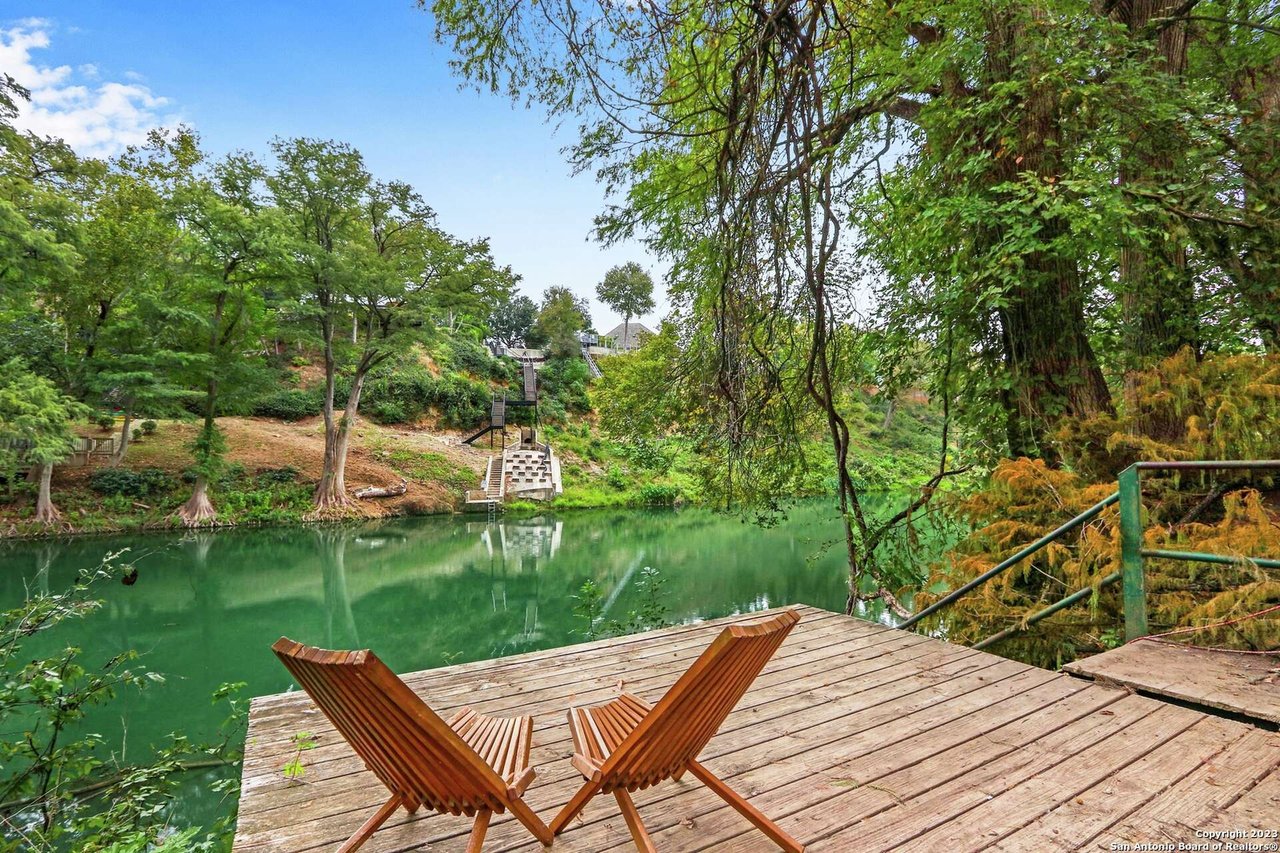
A property may have an impressive view of the Guadalupe River without providing direct access to the water.
Another may include river frontage but have steep terrain that makes reaching the water difficult.
A third property may offer access through a recorded easement or neighborhood common area.
Before purchasing, I recommend investigating:
- Whether the property directly borders the river
- Where the surveyed property boundaries are located
- Whether access is private, shared or through an easement
- Whether the riverbank is physically accessible
- Whether existing stairs or pathways are permitted
- Whether any access rights are documented
- Whether restrictions affect the use of the riverfront area
These details can significantly affect how a buyer uses the property.
2. Understand Texas River Access and Property Rights
Texas has specific laws governing navigable waterways and public access.
According to the Texas Parks and Wildlife Department, the public generally has rights to lawful recreational use of navigable streams, but those rights do not create a general right to cross privately owned land to reach the water.
That distinction is important for riverfront property owners.
Owning land next to a navigable river does not necessarily mean the owner has exclusive control over the waterway.
Likewise, members of the public generally cannot cross private property without permission simply because they want to reach the river.
Buyers can learn more through the Texas Parks and Wildlife Department's guide to public access to navigable streams.
For an individual waterfront purchase, I recommend reviewing the survey, title commitment, recorded easements and any property-specific legal questions with the appropriate professionals.
3. Check the Floodplain Before Falling in Love With the Property
Flood risk is one of the most important considerations when purchasing riverfront real estate in New Braunfels.
A waterfront location can be beautiful while still requiring substantial flood-related due diligence.
The City of New Braunfels maintains floodplain information and provides resources for reviewing mapped flood hazards.
Buyers can begin with the City of New Braunfels floodplain management resources.
For a specific property, I recommend investigating:
- The current FEMA flood zone
- Whether the home itself is within a mapped flood hazard area
- Whether only part of the land is within the floodplain
- Whether the property is within a regulatory floodway
- Available elevation certificates
- Prior flooding or water intrusion
- Drainage and erosion history
- Flood insurance requirements and estimated premiums
- Restrictions on future construction or improvements
These questions should be addressed early in the purchase process.
They can affect financing, insurance, renovation plans and the overall cost of ownership.
What Is the Difference Between a Floodplain and a Floodway?
A floodplain is an area that may be subject to flooding.
A regulatory floodway is generally the portion of the floodplain needed to carry floodwaters without causing an unacceptable increase in flood levels under applicable standards.
The distinction matters because development restrictions can be more stringent within a floodway.
For example, a buyer considering a riverfront home with plans to build an addition, install a substantial outdoor structure or change the property's grading should verify whether those improvements are permissible.
I would not assume that owning the land automatically means every proposed improvement can be constructed.
4. A Home Outside the Floodplain Can Still Have Flood Risk
One misconception is that a home outside a mapped high-risk flood zone cannot flood.
That is not correct.
Flood maps are important planning and insurance tools, but they do not eliminate every possible source of flooding.
Localized drainage, intense rainfall, runoff and changing conditions can still affect properties outside mapped high-risk areas.
The National Flood Insurance Program notes that flood claims occur outside high-risk flood zones as well.
Buyers can review additional information through FloodSmart's explanation of flood risk and flood zones.
For a waterfront property, I recommend considering both the mapped flood designation and the property's actual site conditions.
5. Get Flood Insurance Quotes Before the Option Period Ends
Flood insurance should be part of the financial evaluation before purchasing a riverfront home.
Depending on the property, lender and flood designation, flood insurance may be required.
Even when it is not required by the lender, a buyer may still decide that coverage is appropriate.
I recommend obtaining actual insurance quotes rather than assuming the cost based on the seller's current premium or a neighboring property.
Premiums can depend on property-specific risk characteristics and coverage choices.
For luxury properties, I would also discuss coverage limits with an insurance professional.
The National Flood Insurance Program has policy limits, and a higher-value home may require consideration of additional coverage options.
Buyers should also ask when coverage becomes effective. New flood insurance policies commonly have a waiting period, although exceptions can apply to certain mortgage-related transactions and other circumstances.
Insurance should be evaluated before contractual deadlines expire, not after the buyer has already committed to closing.
6. Evaluate the Elevation of the Home, Not Just the River
Two homes along the same stretch of river may have very different relationships to the water.
One may sit relatively close to river level.
Another may be elevated significantly above the riverbank.
That difference can affect:
- Flood exposure
- River access
- Views
- Stairs and pathways
- Retaining walls
- Outdoor living areas
- Drainage
- Construction feasibility
An elevated homesite can provide a dramatic setting, but it may also require a longer or steeper route to the water.
A lower homesite may offer easier access while presenting different flood-related considerations.
Neither arrangement is automatically better.
The appropriate choice depends on the buyer's priorities and the property's actual conditions.
7. Pay Attention to Riverbank Erosion and Retaining Walls
Waterfront buyers should evaluate the condition of the land between the home and the river.
Riverbanks can be affected by erosion, changing water conditions, vegetation and prior improvements.
Some properties may have retaining walls, steps, terraces or other structures near the water.
Visible conditions that may warrant further evaluation include:
- Significant erosion
- Exposed roots
- Soil movement
- Cracking or displacement in retaining walls
- Damaged steps or pathways
- Areas of repeated washout
- Drainage discharge near unstable slopes
- Prior repairs with limited documentation
These observations are not a substitute for professional evaluation.
If the riverbank or supporting structures raise concerns, a qualified engineer or other appropriate specialist may be needed.
Waterfront improvements can also involve permitting and environmental requirements, so buyers should not assume that a damaged structure can simply be replaced without additional review.
8. Can You Build a Deck, Dock or Stairs to the River?
Possibly, but waterfront construction should be evaluated on a property-by-property basis.
A buyer may envision a large deck overlooking the river, a staircase to the water or a private dock.
Whether those improvements are allowed depends on several factors.
Potential considerations include:
- Property boundaries
- Recorded easements
- Floodplain and floodway regulations
- Municipal or county permitting
- Applicable state or federal requirements
- Deed restrictions
- HOA rules when applicable
- Riverbank stability
- Engineering requirements
The governing jurisdiction matters.
A property within New Braunfels city limits may be subject to different requirements than a property in an unincorporated area of Comal County.
Comal County maintains its own floodplain development and permitting resources for applicable properties.
If a proposed waterfront improvement is essential to the purchase, I recommend investigating feasibility before closing.
9. River Conditions Can Change Throughout the Year
One of the advantages of a riverfront home is being able to enjoy the natural setting.
However, river conditions are not necessarily constant.
Water levels, flow rates and recreational conditions can change because of rainfall, drought, upstream conditions and reservoir operations.
The Guadalupe-Blanco River Authority monitors conditions throughout the Guadalupe River Basin, including Canyon Reservoir and downstream river flows.
In August 2026, for example, the authority announced adjustments to Canyon Reservoir releases as reservoir conditions changed.
That is a useful reminder that the river should not be evaluated based on one afternoon's appearance.
Buyers can review current and historical conditions through the Guadalupe-Blanco River Authority's basin conditions information.
For a riverfront purchase, I would consider how the property's setting and access may function under different river conditions.
10. Be Careful With Short-Term Rental Assumptions
New Braunfels attracts visitors throughout the year, which can make waterfront properties interesting to buyers considering a second home or potential rental use.
But owning a home near the river does not automatically mean it can legally operate as a short-term rental.
The City of New Braunfels has specific zoning and permitting restrictions on short-term rentals.
Under the city's published regulations, short-term rentals are not allowed in residential zoning districts. Permitted operation in other zoning districts is subject to additional requirements, and short-term rentals are not permitted in the floodway.
The city also requires permits and annual life-safety inspections for qualifying short-term rentals within city limits.
Buyers considering rental income should review the City of New Braunfels short-term rental regulations and verify the specific property's zoning and eligibility.
Properties outside city limits may be subject to different rules, including applicable deed restrictions and association requirements.
I would never recommend purchasing a property based on projected short-term rental income without confirming that the intended use is legally permissible.
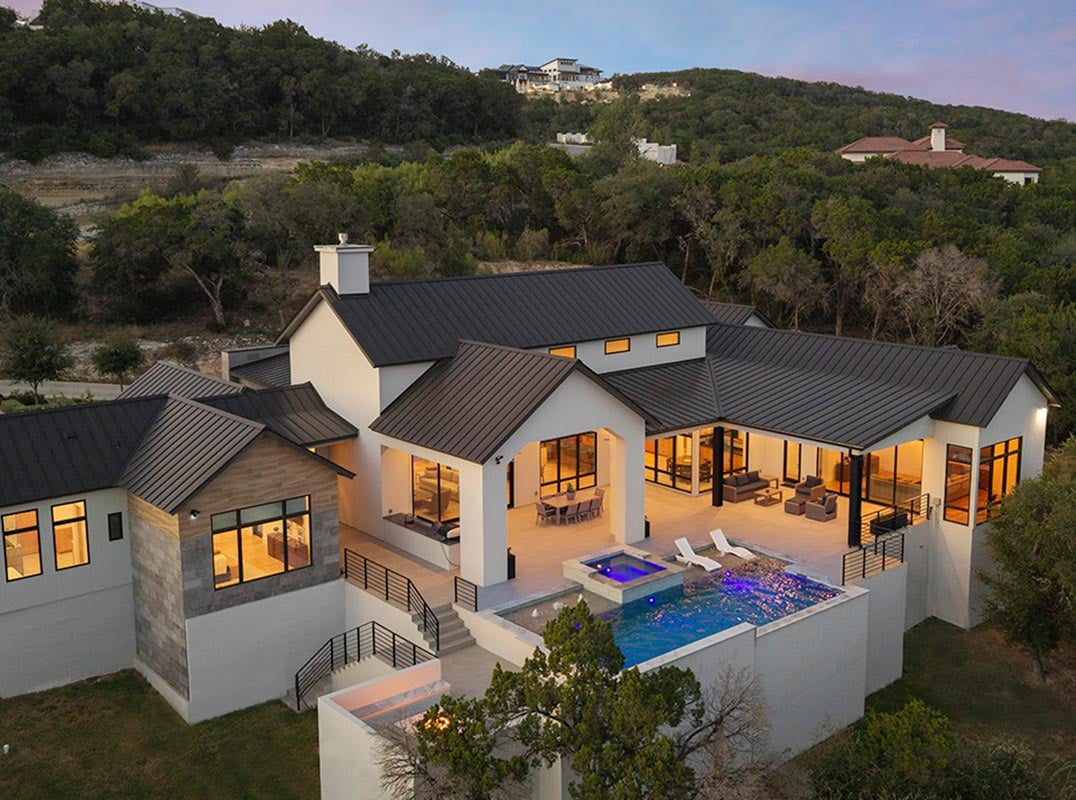
11. Evaluate the Property's Outdoor Living Areas
Outdoor living is often a major part of the appeal of a luxury riverfront home.
Features may include:
- Covered patios
- Outdoor kitchens
- Fireplaces
- Pool and spa areas
- River-view decks
- Landscaped terraces
- Guest accommodations
- Private pathways
- Outdoor entertaining spaces
But I want buyers to evaluate these features beyond their appearance.
Questions worth asking include:
- Were improvements properly permitted when required?
- Are there drainage or erosion concerns?
- What maintenance will be necessary?
- Are outdoor structures within the surveyed boundaries?
- Do any improvements encroach into easements?
- Could flooding affect certain outdoor areas?
- Are repairs or replacements subject to special requirements?
A beautiful outdoor space can be a major asset, but buyers should understand the responsibilities that come with it.
12. What About Septic Systems and Utilities?
Not every riverfront property has the same utility configuration.
Depending on its location, a home may be connected to public water and wastewater services or rely on other approved systems.
For properties with an on-site sewage facility, buyers should investigate the system's condition, permits, maintenance history and suitability for the property.
Site conditions and floodplain considerations may also affect future improvements.
When evaluating a riverfront home, I recommend confirming:
- Water service
- Wastewater or septic arrangements
- Electrical service
- Internet availability
- Drainage infrastructure
- Utility easements
- Maintenance responsibilities
These details are especially important when comparing an established riverfront residence with a newer home in a conventional subdivision.
13. Understand the Difference Between Riverfront Value and Traditional Home Value
Riverfront real estate should not be valued solely by interior square footage.
Two homes with similar floor plans may have substantially different values because of their relationship to the water.
For example, one property may offer direct, usable river access and extensive outdoor improvements.
Another may have a larger house but a steep, difficult-to-access riverbank.
Other factors can include:
- Length and usability of river frontage
- Views
- Flood exposure
- Elevation
- Property size
- River access
- Construction quality
- Renovation level
- Outdoor living improvements
- Privacy
- Location within the New Braunfels area
- Comparable waterfront inventory
That is why I prefer evaluating riverfront properties against the most relevant waterfront sales and current alternatives whenever possible.
A traditional neighborhood average may not adequately account for the value or limitations of a unique riverfront homesite.
14. Compare Riverfront Homes With Other New Braunfels Luxury Properties
Not every buyer looking for a luxury home in New Braunfels ultimately needs direct river frontage.
Some may prefer an established neighborhood with a larger home, a custom residence on acreage or a property with extensive outdoor living space away from the river.
Others may prioritize a newer home with fewer site-specific maintenance considerations.
For that reason, I recommend comparing riverfront properties with the broader luxury market rather than evaluating them in isolation.
Buyers can explore my New Braunfels neighborhood and real estate guide or browse homes for sale in New Braunfels to better understand the range of available properties.
For buyers considering larger properties beyond the river, my guide to luxury homes with acreage near San Antonio explores additional Hill Country options.
My Riverfront Home Buying Checklist
Before purchasing a riverfront property in New Braunfels, these are the questions I would want answered:
- Property boundaries: Does the survey accurately identify the land being purchased?
- River frontage: Does the property actually border the river?
- Legal access: What documented rights exist to reach and use the waterfront area?
- Flood risk: What do current flood maps and available property records indicate?
- Insurance: What will appropriate homeowners and flood coverage cost?
- Elevation: How does the house sit relative to the river and surrounding terrain?
- Drainage: How does stormwater move across the property?
- Erosion: Are the riverbank and any retaining structures in satisfactory condition?
- Permits: Were existing improvements appropriately authorized?
- Future plans: Can the buyer legally and practically complete desired improvements?
- Utilities: What water, wastewater and other systems serve the property?
- Restrictions: Are there easements, deed restrictions or HOA requirements?
- Rental use: Is the intended rental arrangement permitted, if relevant?
- Maintenance: What ongoing responsibilities come with the riverfront setting?
Not every property requires every type of specialist.
But a waterfront purchase can involve questions that go beyond a standard home inspection.
The goal is to identify those questions early enough for buyers to make informed decisions within their contractual deadlines.
Frequently Asked Questions About Buying Riverfront Property in New Braunfels
Are there luxury riverfront homes in New Braunfels?
Yes. Buyers can find distinctive waterfront and river-view properties in the New Braunfels area, particularly along portions of the Guadalupe River. Availability, architecture, lot size and direct river access vary by property.
Is the Guadalupe River or Comal River better for buying a waterfront home?
Neither is universally better. The Guadalupe offers a broader range of riverfront settings throughout the surrounding area, while Comal River residential opportunities are more geographically concentrated. The right choice depends on the individual property, access, location and buyer's priorities.
Do all Guadalupe River homes have private river access?
No. River views, river frontage and legal access are different characteristics. Buyers should verify property boundaries, easements and documented access rights before purchasing.
Do riverfront homes in New Braunfels require flood insurance?
Flood insurance requirements depend on the property's flood designation, financing and other circumstances. Some financed properties in high-risk flood zones require coverage. Buyers should obtain property-specific insurance guidance and quotes before closing.
Can a riverfront home flood if it is outside the FEMA floodplain?
Yes. Properties outside mapped high-risk flood zones can still experience flooding from heavy rainfall, runoff or other conditions. FEMA mapping is an important starting point but does not eliminate all flood risk.
Can I build a deck or dock on my Guadalupe River property?
Possibly. Permissibility depends on property boundaries, floodplain regulations, easements, applicable permits and other site-specific requirements. Buyers should confirm feasibility with the relevant authorities and professionals before relying on a proposed improvement.
Can I use a New Braunfels riverfront home as an Airbnb?
Not automatically. New Braunfels restricts short-term rentals based on zoning and other requirements, including prohibiting them in residential zoning districts within city limits. Buyers must verify the property's specific eligibility and applicable restrictions before assuming short-term rental use is permitted.
Does owning Guadalupe River frontage mean I own the river?
No. Texas law recognizes public rights involving navigable waterways, and ownership of adjacent land does not automatically establish exclusive control of the river. Property boundaries and legal rights should be evaluated individually.
Are riverfront homes more expensive than other New Braunfels homes?
River frontage can influence value, but pricing depends on the individual property. Access, elevation, flood exposure, usable land, condition, improvements and comparable sales all affect how a waterfront home should be evaluated.
Should I get additional inspections on a riverfront home?
Depending on the property, additional evaluations may be appropriate for drainage, erosion, retaining walls, foundations, septic systems or other site-specific conditions. A general home inspection may not address every waterfront concern.
Considering a Riverfront Home in New Braunfels?
Riverfront real estate can offer a distinctive combination of natural surroundings, outdoor living and long-term enjoyment.
But the most important details often extend beyond the house itself.
Understanding the land, flood risk, legal access, construction limitations and ongoing responsibilities is essential to evaluating the complete property.
I'm Cody Miller, a Luxury Real Estate Advisor with Kuper Sotheby's International Realty serving New Braunfels, San Antonio and the surrounding Texas Hill Country.
I work with buyers and sellers across luxury resale, custom homes, new construction, acreage and distinctive residential properties throughout the region.
If you're considering a riverfront home or luxury property in New Braunfels, contact Cody Miller to discuss available properties, comparable sales and the due diligence that matters before you buy.