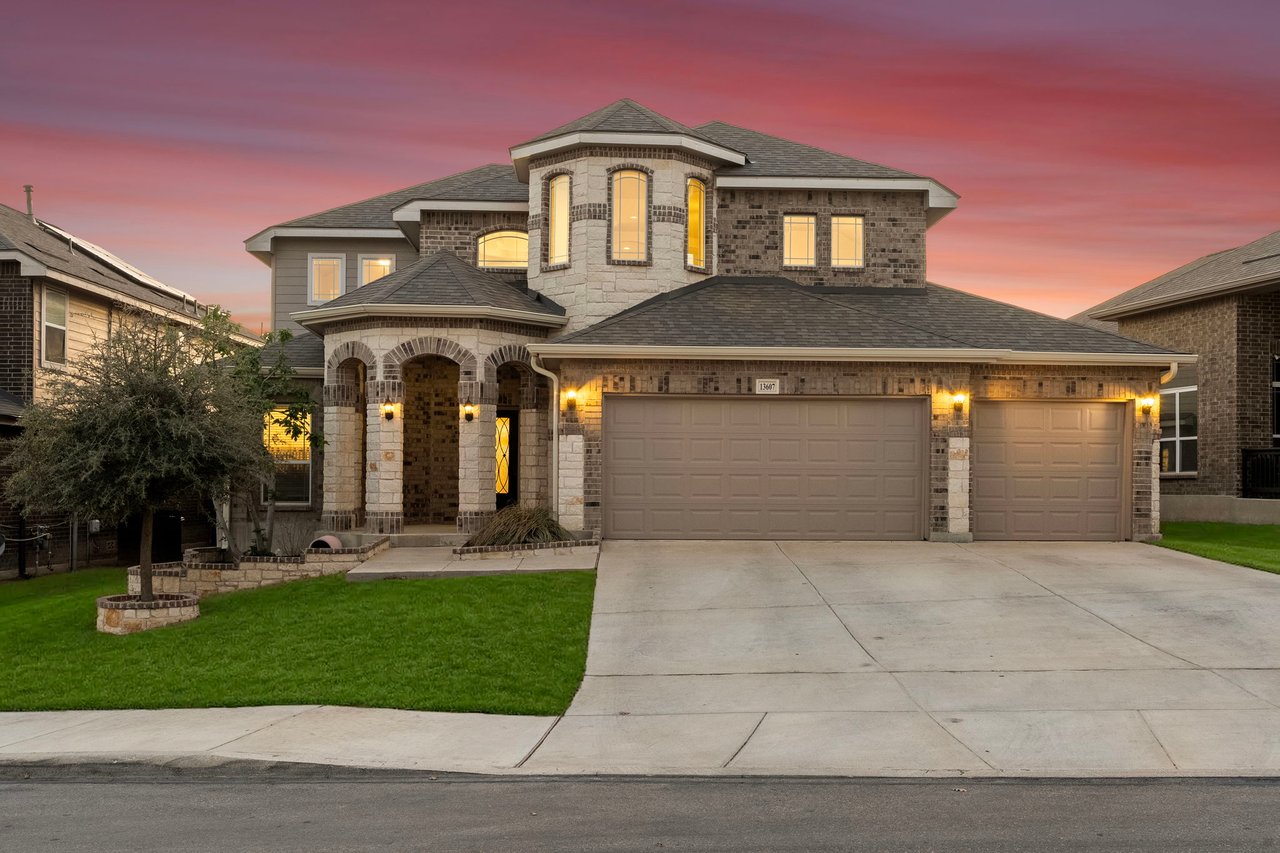
How much can you negotiate on a house in San Antonio right now?
In 2026, that question is much more relevant than it was during the highly competitive housing markets of a few years ago.
San Antonio buyers currently have meaningful negotiating leverage, but that does not mean every seller will accept a dramatically lower price.
The opportunity depends on the individual property.
A home that has been sitting on the market for months, already reduced its price and is competing with several similar properties creates a very different negotiation from a newly listed, well-priced home in excellent condition.
And purchase price is only one thing buyers can negotiate.
Depending on the transaction, closing-cost assistance, repairs, financing concessions, appliances, surveys, home warranties and other contract terms can sometimes provide meaningful value to a buyer.
As a real estate advisor working with buyers throughout San Antonio and the surrounding Texas Hill Country, I think 2026 is a market where buyers should be strategic rather than simply aggressive.
Here is how I approach that negotiation.
Is San Antonio a Buyer's Market in 2026?
Current data shows that San Antonio buyers have considerably more leverage than sellers in the broader market.
Redfin reported in September 2026 that San Antonio had approximately 116% more sellers than buyers in August. Redfin classifies a market with more than 10% more sellers than buyers as a buyer's market.
Current San Antonio housing data also shows a median sale price of $264,825 for the three months ending August 2026, down 1.9% year over year. Homes sold for an average of approximately 3% below list price, while 44.4% of listings had experienced a price drop.
You can review the latest San Antonio housing market data from Redfin.
Those numbers are useful context, but they should not dictate what you offer on an individual property.
A desirable luxury property in The Dominion can have a completely different negotiating environment from a completed new-construction inventory home competing against several similar properties.
The broader market gives buyers leverage. The individual listing determines how much of that leverage you can realistically use.
So, How Far Below Asking Price Should You Offer?
There is no percentage I would automatically apply to every San Antonio home.
I first want to determine what the property is worth based on the best comparable evidence available.
Then I want to understand the seller's position.
Before recommending an offer, I look at factors such as:
- Recent comparable sales
- Current competing listings
- Original list price
- Current asking price
- Previous price reductions
- Days on market
- Property condition
- Whether the home is vacant or occupied
- Whether it has previously gone under contract
- Whether it is new construction
- How many comparable properties are currently available
If comparable sales support the asking price and the home has been listed for only a few days, an extremely aggressive offer may accomplish very little.
If the property has been sitting for months, has already undergone multiple reductions and still appears overpriced relative to recent sales, I would approach it very differently.
The offer should come from the evidence, not an arbitrary rule that every buyer should start a certain percentage below list price.
Why the Average Sale-to-List Ratio Is Useful—but Not Your Offer Formula
Current Redfin data shows that San Antonio homes are selling for an average of approximately 3% below list price.
That is useful market context, but I would never automatically take 3% off every home's asking price.
An average combines many different transactions.
Some homes sell close to asking price. Some require substantial reductions. Others may have already been reduced before the buyer ever submits an offer.
For me, the statistic confirms that negotiation is occurring. It does not tell us exactly how to negotiate the house you want to buy.
Days on Market Can Create Negotiating Leverage
One of the first things I look at is how long the home has actually been available.
A seller's perspective can change with time.
During the first week, a seller may reasonably want to see how the market responds before entertaining a substantial discount.
After several months without a sale, the conversation may be different.
But days on market should never be considered alone.
A home may have accumulated market time because it was initially overpriced and has now been repositioned correctly. Another property may still be priced above comparable sales even after several reductions.
I want to understand the entire listing and pricing history before deciding how aggressively to negotiate.
Price Reductions Tell You Something—But Not Everything
Multiple price reductions can indicate that a seller is responding to the market.
They can also mean the seller believes they have already made their concession.
That is why I do not assume a reduced listing automatically means another large reduction is available.
Instead, I ask a more important question:
Where does the current asking price sit relative to what comparable homes have actually sold for?
If a property originally listed well above the market and has since been reduced, its original asking price should not anchor our analysis.
We should evaluate the home based on today's price, today's competition and today's comparable sales.
Don't Just Negotiate Price
This is one of the biggest opportunities I see buyers overlook.
Purchase price gets most of the attention because it is the largest number in the transaction.
But the strongest offer strategy considers the entire contract.
Depending on the transaction, buyers may negotiate items involving:
- Seller contributions toward allowable closing costs
- Repairs
- Financing-related concessions
- Closing date
- Survey provisions
- Home warranty
- Appliances or other personal property
- Leaseback terms
- Other property-specific terms
Sometimes the best deal is not the lowest possible purchase price.
It is the combination of price and terms that creates the most value for the buyer.
Should You Ask the Seller to Pay Closing Costs?
It can make sense, particularly when preserving cash is important to the buyer.
Consider the difference between negotiating only a modest reduction in purchase price and negotiating an allowable seller contribution toward closing costs.
Depending on the buyer's financing and objectives, the closing-cost contribution could potentially provide greater immediate value by reducing cash needed at closing.
There are limits on seller contributions depending on the loan program and transaction, so I coordinate with the buyer's lender before structuring an offer around a specific credit.
The important point is that buyers should evaluate the net economic benefit of the offer rather than focusing exclusively on the sales price.
What About Negotiating an Interest-Rate Buydown?
This is another strategy worth discussing with the lender.
Instead of using all available negotiating leverage on purchase price, a buyer may explore whether an allowable seller contribution can be used toward discount points or another lender-approved financing strategy.
The math matters.
A lower purchase price and a lower interest rate affect the buyer differently.
I prefer having the lender calculate the alternatives so the buyer can compare actual cash-to-close, monthly payment and financing costs rather than guessing which concession is more valuable.
The Inspection Can Create a Second Negotiation
The initial contract is not necessarily the end of the negotiation.
Depending on the contract and the buyer's applicable rights, an inspection may identify issues that lead the buyer to request repairs or another resolution.
That does not mean the seller is automatically obligated to repair everything an inspector identifies.
I generally separate inspection findings into categories and focus most heavily on significant items involving:
- Roof condition
- Foundation or structural concerns
- HVAC systems
- Electrical issues
- Plumbing
- Water intrusion
- Pool and major equipment
- Major appliances included with the property
- Other significant property-condition concerns
Cosmetic preferences are different from material property issues.
A focused repair request supported by the inspection is often a stronger negotiating position than asking the seller to correct every minor item in the report.
Don't Negotiate Against Yourself
This is one of the simplest principles I use when representing buyers.
If we submit an offer and the seller does not accept it, I generally want a response from the seller whenever possible.
If they are willing to counter, that counter gives us information.
Immediately increasing our offer without receiving anything in return can unnecessarily weaken the buyer's position.
A negotiation is a conversation.
The objective is to learn where the seller is willing to move while protecting the buyer's leverage.
A Strong Offer Is More Than the Purchase Price
Sellers evaluate more than one number.
Depending on the transaction, an offer can also involve:
- Earnest money
- Option money and option period
- Financing terms
- Closing date
- Requested seller contributions
- Survey provisions
- Home warranty requests
- Personal property
- Sale-of-other-property contingencies
- Leaseback terms
A buyer can sometimes strengthen an offer without simply paying more.
For example, a buyer who does not need certain seller-paid items or who can accommodate a seller's preferred closing timeline may be able to make the overall offer more attractive while maintaining a stronger position on price.
This becomes particularly useful when we are asking the seller to make a meaningful concession somewhere else.
How I Approach Negotiating a Luxury Home
Luxury negotiations require additional context because the properties are often less interchangeable.
At higher price points, there may be fewer truly comparable sales.
A custom home can also contain features that are difficult to value using price per square foot alone.
I look at factors including:
- Homesite
- Architecture
- Renovation quality
- Pool and outdoor living
- Views
- Privacy
- Garage capacity
- Guest accommodations
- Age of major systems
- Competing luxury inventory
This is particularly important when comparing communities such as The Dominion, Shavano Park, Stone Oak and the Texas Hill Country.
A buyer evaluating a seven-figure property can see how differently the same budget performs across the region in my guide to what $1 million buys in San Antonio.
New Construction Is a Different Negotiation
Builders operate differently from individual homeowners.
A builder may have several similar homes to sell, established pricing within a community and incentives tied to financing or closing costs.
Depending on the property, builder and stage of construction, the negotiation may involve:
- Purchase price
- Closing-cost assistance
- Financing incentives
- Rate incentives
- Lot premiums
- Design selections
- Appliances
- Completed inventory incentives
A builder may also view a completed inventory home differently from a property that has not yet been built.
That is why I compare the entire economic package rather than focusing only on the advertised sales price.
If you are considering a builder, read my guide to buyer representation for new construction in San Antonio before beginning serious discussions with a sales office.
When Is a Lower Offer Reasonable?
A below-asking offer becomes easier to support when there is objective evidence behind it.
Examples can include:
- Comparable sales below the asking price
- Extended time on market
- Multiple previous price reductions
- Significant competing inventory
- Major deferred maintenance
- A property returning to market after a previous contract
- A completed builder inventory home that has remained unsold
A low offer simply because "it doesn't hurt to ask" is different from a lower offer supported by the market.
I prefer the second approach because it gives us a position we can explain and defend.
When Would I Be More Careful About Negotiating Aggressively?
Buyer leverage does not eliminate competition.
I would be more cautious about pushing too far when:
- The home is newly listed
- The asking price is already supported by comparable sales
- The property is unusually difficult to replace
- There are other interested buyers
- The homesite is exceptional
- The property has already been priced below competing inventory
The goal is not to "win" the negotiation and lose the house.
The goal is to purchase the property on terms that make sense.
What If the Seller Will Not Move on Price?
Then I start looking at the rest of the transaction.
If the seller is firm on price, there may still be opportunities involving:
- Closing costs
- Repairs
- Financing concessions
- Closing timeline
- Included appliances
- Survey
- Home warranty
- Other negotiated property or contract terms
A seller who refuses to reduce the sales price may still agree to terms that provide meaningful value to the buyer.
My Approach to Making an Offer in San Antonio Right Now
If I were buying a home in today's San Antonio market, I would not begin by asking, "How low can we go?"
I would ask three questions:
- What is the property actually worth based on the best available evidence?
- What does the listing history tell us about the seller's current negotiating position?
- Which combination of price and terms creates the most value for the buyer?
Those answers give us a strategy.
And in a market where buyers have more choices, having a strategy is much more useful than submitting an arbitrary low offer and hoping it works.
Frequently Asked Questions About Negotiating a Home in San Antonio
Can you offer below asking price on a house in San Antonio?
Yes. Buyers can offer below asking price, but whether the offer is reasonable depends on comparable sales, days on market, condition, competing inventory and the seller's position. There is no universal percentage that should be applied to every property.
How much below asking price should I offer in San Antonio in 2026?
Start with the property's estimated market value rather than an arbitrary percentage. A correctly priced home may justify an offer near asking, while an overpriced property with substantial market time may support a more aggressive position.
Are San Antonio homes selling below asking price?
On average, yes. Current Redfin data shows San Antonio homes selling for approximately 3% below list price. That is a market-wide average, however, and should not be used as an automatic discount for an individual property.
Can I ask a San Antonio seller to pay closing costs?
Yes, seller contributions toward allowable buyer costs can be negotiated. The amount a buyer can use depends on the transaction and loan program, so the lender should confirm applicable limits before the offer is structured.
Can a seller help lower my mortgage rate?
Depending on the financing, an allowable seller contribution may be usable toward discount points or other lender-approved costs. Buyers should ask their lender to compare the actual financial impact with a purchase-price reduction.
Can I negotiate repairs after the home inspection?
Potentially, depending on the contract and the buyer's applicable rights. Buyers can request repairs or another resolution, but sellers are not automatically required to agree to every requested item.
Are builders negotiating in San Antonio in 2026?
Some builders offer incentives involving financing, closing costs, upgrades or completed inventory, but programs vary by builder, community and property. Buyers should compare the entire package rather than assuming the advertised incentive is automatically the best option.
Does a house being on the market a long time mean the seller will take a low offer?
Not necessarily. Extended market time can strengthen a buyer's negotiating position, but the seller's motivation and the property's current value still matter. Review the complete listing and price history before deciding what to offer.
Is San Antonio a buyer's market right now?
Current September 2026 data indicates a strong imbalance in favor of buyers in the broader San Antonio market, with substantially more sellers than buyers. Individual neighborhoods, price ranges and properties can still behave differently.
Thinking About Buying a Home in San Antonio?
Today's market gives buyers opportunities, but the strongest negotiations are based on information rather than assumptions.
Understanding comparable sales, listing history, competing inventory, property condition and the seller's position can help determine where it makes sense to push and where it may make more sense to protect the opportunity to purchase the home.
I'm Cody Miller, a Luxury Real Estate Advisor with Kuper Sotheby's International Realty serving buyers and sellers throughout San Antonio and the surrounding Texas Hill Country.
My work includes luxury resale, new construction, custom homes and relocation throughout San Antonio, Shavano Park, The Dominion, Stone Oak, Boerne, Fair Oaks Ranch and surrounding communities.
If you are considering buying a home, contact Cody Miller to develop a strategy for your San Antonio home search and negotiation.