One of the hardest conversations in luxury real estate starts with a seemingly simple question:
What is my home worth?
For a traditional subdivision home with several recent sales of nearly identical properties, that question may be relatively straightforward.
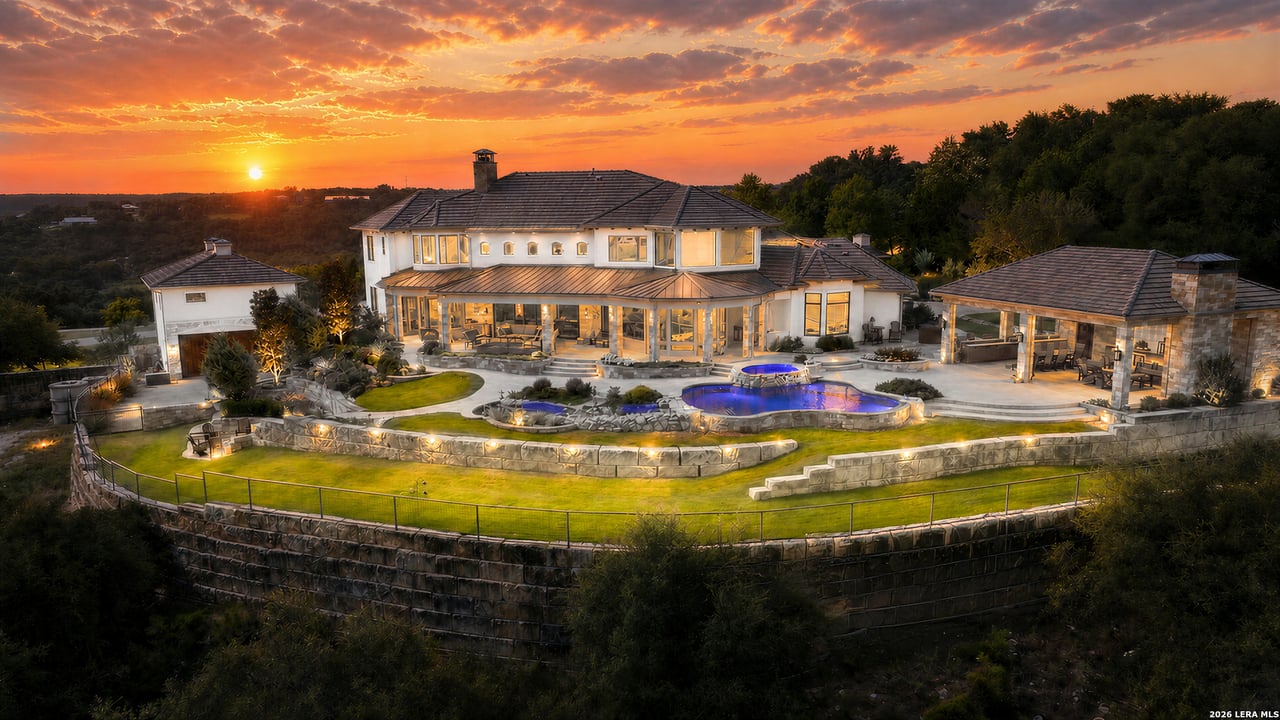
For a custom estate in The Dominion, a renovated property in Shavano Park, a Hill Country home on acreage or a one-of-a-kind residence with extensive improvements, it can be much more complicated.
There may not be another home with the same architecture, lot, views, renovation level, pool, garage configuration or interior finish package.
That does not mean the home cannot be valued.
It means the analysis has to go deeper than finding three nearby sales and averaging their price per square foot.
As a Luxury Real Estate Advisor with Kuper Sotheby's International Realty serving San Antonio and the surrounding Texas Hill Country, this is how I think about pricing distinctive luxury properties when the comparable sales are imperfect.
Why Are Luxury Homes Harder to Price?
Luxury homes are harder to price because they tend to become less standardized as the price point rises.
Consider two 5,000-square-foot homes in the same general area.
One may sit on a half-acre interior lot, have mostly original finishes and include a three-car garage.
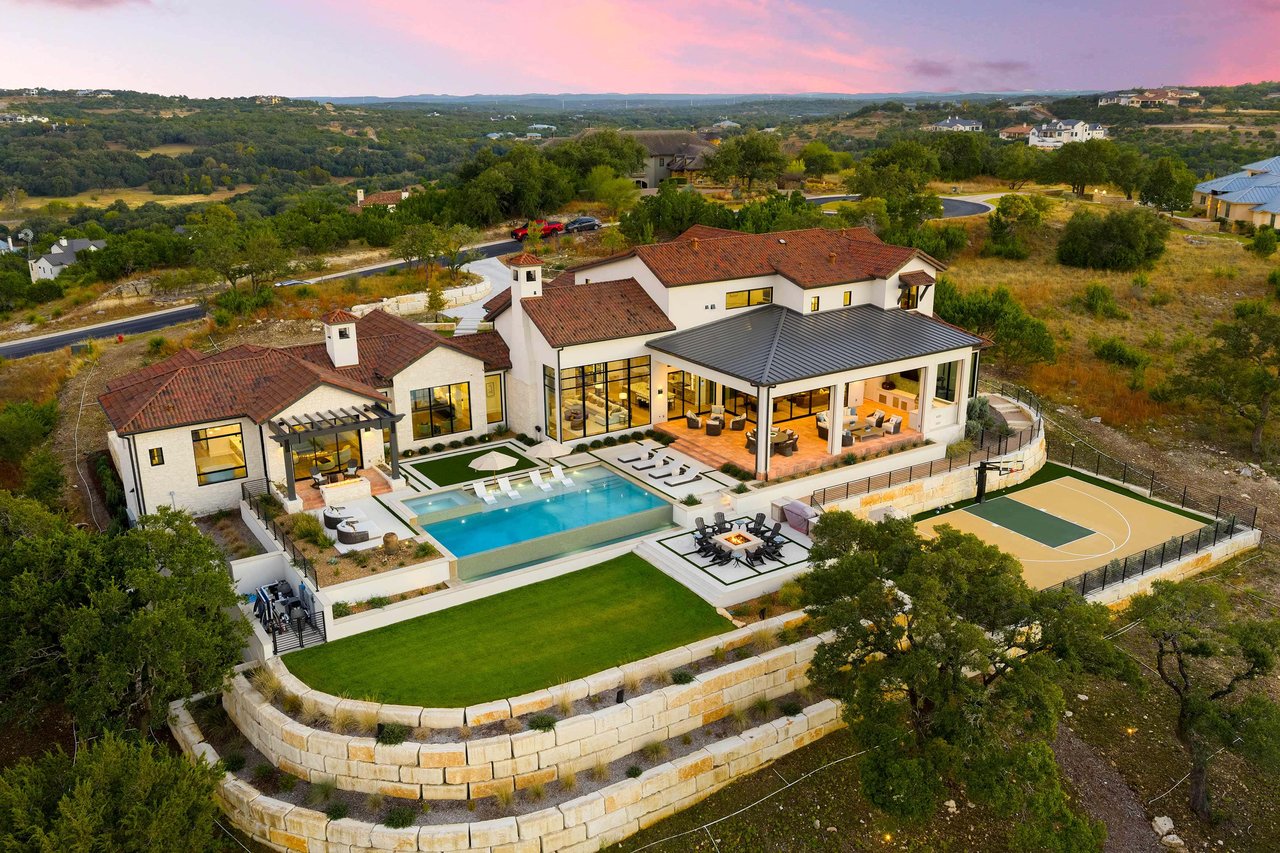
The other may sit on a larger premium homesite, have undergone a substantial renovation, include a pool and outdoor kitchen, offer four garage spaces and have a completely different architectural style.
On paper, their square footage may look similar.
To a buyer, they may be completely different properties.
This is especially common throughout San Antonio's luxury market, where custom construction plays a significant role in communities such as The Dominion and throughout the surrounding Hill Country.
What Is a Comparable Sale?
A comparable sale, often called a "comp," is a recently sold property used as a reference point when evaluating another home's potential market value.
The strongest comparable is not necessarily the house closest to yours.
Ideally, I am looking for properties that compete with the subject home in the eyes of the same buyer.
That can involve comparing:
- Location and neighborhood
- Property type
- Home size
- Homesite size and quality
- Age
- Architecture
- Construction quality
- Condition
- Renovation level
- Pool and outdoor improvements
- Garage capacity
- Views or golf-course position
- Guest accommodations
- Overall buyer appeal
The more unique the property, the less likely it becomes that every one of those characteristics will exist in a single recent sale.
That is where a more detailed analysis becomes important.
What If There Are No Perfect Comparable Sales?
I do not expect to find a perfect comparable for every luxury home.
Instead, I build a range of evidence.
One sold property may provide the best comparison for location.
Another may be more similar in size.
A third may have the closest renovation level.
A fourth may provide insight into what buyers are willing to pay for a premium homesite or newer construction.
The goal is not to pretend those homes are identical.
The goal is to understand what each sale tells us about the subject property.
Why I Do Not Start With Price Per Square Foot
Price per square foot is useful as a reference point, but it can become misleading when it is treated as the valuation method.
For example, suppose a 4,000-square-foot home sells for $1 million.
That equals $250 per square foot.
It would be tempting to multiply $250 by the square footage of another nearby home and call that its value.
But what if the second home has:
- A substantially larger lot
- A pool and extensive outdoor living area
- A newer roof and HVAC systems
- A recently renovated kitchen
- Better views
- A fourth garage bay
- A more desirable position within the community
Or what if it has the opposite?
The square-foot calculation cannot adequately explain those differences by itself.
That is one reason luxury home values can vary substantially even within the same neighborhood.
Start With the Micro-Market, Not San Antonio as a Whole
A San Antonio median home price tells me very little about the value of an individual luxury estate.
Even luxury neighborhoods should not always be treated as one market.
The Dominion is a good example.
The community includes villas, newer custom residences, golf-course properties and substantial estate homes.
A smaller luxury residence may compete with a completely different group of homes than a large custom estate.
That means a neighborhood-wide average can still be too broad.
The same concept applies in Shavano Park, Stone Oak, Boerne, Cordillera Ranch, Fair Oaks Ranch and other upper-end markets throughout San Antonio and the Hill Country.
I want to identify the smallest meaningful competitive market first and expand outward only when necessary.
How Far Back Should You Look for Luxury Comps?
Recent sales generally deserve the most attention because they reflect the market buyers and sellers are operating in now.
But luxury properties can have lower transaction volume.
If only a handful of genuinely comparable properties have sold recently, I may need to look farther back in time to understand historical relationships between properties.
When I do that, I do not assume an older sale represents today's value.
I use it as another piece of evidence and consider how market conditions have changed since that transaction.
This is particularly important when the market has shifted in terms of inventory, buyer leverage, mortgage rates or the amount of competing luxury inventory available.
Active Listings Matter More Than Many Sellers Realize
Sold properties tell us what buyers have already paid.
Active listings tell us what your home has to compete against today.
I think both matter.
Imagine historical sales suggest a range around $1.5 million, but buyers currently have six compelling alternatives between $1.4 million and $1.5 million.
That competition matters.
A seller does not get to choose the homes buyers compare against theirs.
Buyers do.
That is why I want to understand:
- What else can the buyer purchase?
- How long have those homes been available?
- Have they reduced their prices?
- How updated are they?
- Which properties photograph and show better?
- Which homes offer stronger lots or locations?
- Are there new-construction alternatives?
Pricing should reflect both historical evidence and current competition.
Pending Sales Can Provide Another Signal
Pending properties can also be useful because they show which homes buyers have recently selected.
The final contract price generally is not public while the transaction is pending, so I would not treat the asking price as the eventual sale price.
But the fact that a buyer chose that property, and how quickly it went under contract, can still provide useful market context.
Once the sale closes, it becomes another data point for the pricing analysis.
How Much Does the Homesite Affect Luxury Home Value?
Sometimes substantially.
Lot value is one of the reasons luxury properties with similar square footage can sell at very different prices.
I consider characteristics such as:
- Lot size
- Privacy
- Topography
- Views
- Golf-course frontage
- Cul-de-sac position
- Road exposure
- Usable yard area
- Orientation
- Neighboring properties
- Development or land behind the property
In acreage-oriented markets, additional considerations can include easements, utilities, wells, septic systems, restrictions and how much of the land is actually usable.
That is why acreage properties often require an even more property-specific valuation approach.
Buyers and sellers can read my guide to luxury homes with acreage near San Antonio for more context.
How Do Renovations Affect a Luxury Home's Value?
Renovations matter, but sellers should be careful not to assume that every dollar spent produces a dollar of additional market value.
I look at the improvement through the buyer's perspective.
A thoughtfully renovated kitchen, updated bathrooms, newer flooring, improved lighting and cohesive interior design can change how buyers perceive an established home.
Major mechanical improvements can matter as well.
But the market may value different improvements differently.
A highly personalized renovation can be expensive without appealing to the broadest group of luxury buyers.
Likewise, replacing an aging roof may remove an objection without necessarily adding the entire replacement cost to the home's sale price.
The right question is not simply:
"How much did I spend?"
It is:
"How does this improvement change the way my property competes with the alternatives buyers have today?"
Do Pools Add Value to San Antonio Luxury Homes?
A pool can be an important feature in the San Antonio luxury market, particularly when it is integrated into a well-designed outdoor living environment.
But pools are another area where a simple adjustment can be misleading.
I consider:
- Age and condition
- Design
- Decking
- Spa features
- Outdoor kitchen or living areas
- Remaining usable yard
- How the pool relates to the architecture of the home
A recently completed pool and outdoor living space may influence buyers differently from an older pool requiring significant updates.
Architecture Can Create or Limit Comparable Sales
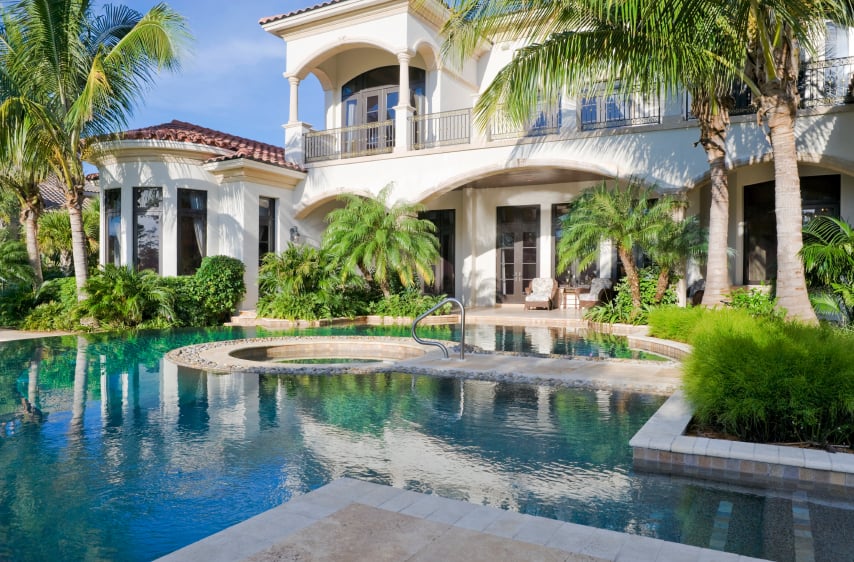
San Antonio's luxury inventory includes traditional, Mediterranean, Spanish-inspired, Hill Country, transitional and contemporary architecture.
Architecture matters because buyers do not always view those homes as substitutes.
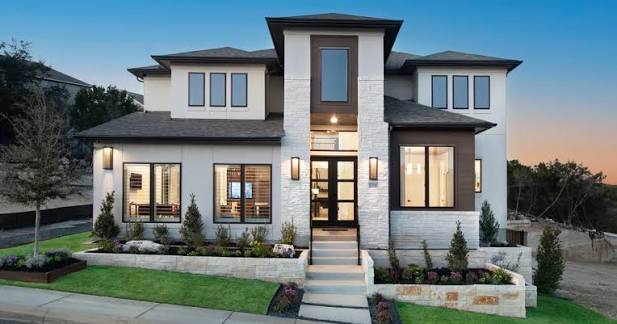
A buyer specifically searching for a newer contemporary residence may not consider an older Mediterranean-style property an equivalent alternative even if the homes have similar square footage and are located nearby.
This is one reason custom-home pricing requires understanding not only the numbers but also the buyer pool.
How Do You Price a Home in The Dominion With Few Comps?
The Dominion illustrates the challenge particularly well.
Its housing stock ranges from smaller luxury residences to substantial multi-million-dollar custom estates.
Even within the community, I would consider:
- Individual section
- Homesite size
- Golf-course or other premium positioning
- Age
- Architecture
- Renovation level
- Pool and outdoor living
- Garage capacity
- Current competition within the same price band
If there are no strong recent sales within the immediate section, the analysis may need to expand while accounting for the differences between properties.
What I would not do is simply average every Dominion sale together.
How Do You Price a Unique Home in Shavano Park?
Shavano Park presents a different challenge.
Properties can vary in lot size, age, renovation level and architecture, while transaction volume is smaller than in many larger master-planned areas.
An established home on a substantial lot may compete against a newer luxury property elsewhere in Shavano Park, or even against options in The Dominion, Hill Country Village or another nearby luxury market.
That is why cross-neighborhood competition can become relevant when direct comps are limited.
My Shavano Park vs. The Dominion comparison explains how differently those two nearby luxury markets are structured.
Should You Price High and Leave Room to Negotiate?
I would not intentionally overprice a luxury home simply to create negotiating room.
There is a difference between positioning a home ambitiously within a defensible range and selecting a price that the available evidence does not support.
The first few weeks of a listing are valuable because the home is new to the market.
Buyers who have already been searching at that price point are likely to see it quickly.
If those buyers reject the value proposition, reducing the price later does not completely recreate the original launch.
This matters even more when buyers have substantial competing inventory to consider.
Why the Highest Suggested List Price Is Not Always the Best Advice
When interviewing agents, a seller may hear several different opinions of value.
The highest number can naturally be appealing.
But I think the more useful question is:
What evidence supports that price?
I would want an agent to explain:
- Which comparable sales matter most
- Why certain sales were excluded
- How the subject home differs from each comp
- What the active competition looks like
- How buyers are behaving in the current market
- Where the likely pricing range falls
- What strategy supports the recommended list price
A pricing presentation should be an analysis, not a competition to give the seller the largest number.
Pricing and Marketing Have to Work Together
Even the best pricing analysis cannot compensate for poor presentation.
Luxury buyers typically see the home online before they ever walk through the front door.
That means photography, videography, staging, landscaping, listing copy and digital presentation all influence the buyer's first impression of value.
I view pricing and marketing as connected.
If the home is positioned at the upper end of its competitive range, the presentation needs to support that position.
If a seller wants buyers to view the property as exceptional, it needs to look exceptional when it reaches the market.
What I Look at Before Recommending a Luxury List Price
For a distinctive San Antonio property, my analysis generally includes:
- The strongest recent sold comparables. Not simply the closest sales, but the properties most relevant to the same buyer.
- Current active competition. What else can a buyer purchase today?
- Pending activity. Which properties are buyers currently selecting?
- Listing history. How have competing homes responded to the market?
- Micro-location. Neighborhood, section, street, homesite and position within the community.
- Property condition. What is updated and what may require investment?
- Architecture and construction. How does the home's design compare with buyer preferences and competing inventory?
- Improvements. Pools, outdoor living, guest quarters, garages, landscaping and other significant features.
- Market direction. What has changed since older comparable sales closed?
- Buyer alternatives. What other neighborhoods or new-construction options compete at the same budget?
Then I use that information to develop a pricing range and a launch strategy rather than pretending there is one mathematically perfect number.
Frequently Asked Questions About Pricing a Luxury Home
How do you price a luxury home when there are no comparable sales?
You build value from multiple pieces of evidence. Recent sales, older relevant sales, active competition, pending properties, location, homesite, condition, renovations and individual features can collectively establish a reasonable pricing range even when no perfect comparable exists.
Is price per square foot accurate for luxury homes?
Price per square foot can be useful as a comparison tool, but it should not be the sole valuation method. Luxury homes can differ substantially in homesite, architecture, condition, renovations, views, pools and other improvements.
How far back should you look for comparable sales?
Recent sales generally provide the strongest evidence, but lower transaction volume can require looking farther back for unique luxury properties. Older sales should be considered in the context of how market conditions have changed since they closed.
Do active listings count as comps?
Active listings do not show what buyers have actually paid, but they are important because they show the alternatives available to buyers today. Sold properties help establish historical market evidence, while active competition helps determine current positioning.
Does a pool increase the value of a luxury home in San Antonio?
A pool can influence buyer appeal and value, but the effect depends on its design, age, condition, outdoor living environment and the property's remaining yard space. The cost of installing a pool should not automatically be added dollar-for-dollar to the home's value.
Should I list my luxury home above market value so I have room to negotiate?
I generally prefer a defensible pricing strategy over intentional overpricing. Buyers have access to extensive market information, and an unrealistic initial price can reduce early interest and lead to longer market time or later price reductions.
Are automated home values accurate for luxury properties?
Automated estimates can provide a reference point, but distinctive luxury and custom homes often require property-specific analysis because an automated model may not fully account for renovations, lot quality, architecture, views, condition and other features that materially affect buyer demand.
What is the best way to determine what my San Antonio luxury home is worth?
A detailed property-specific market analysis should compare the home with relevant recent sales and current competition while accounting for location, homesite, architecture, condition, improvements and current buyer behavior.
Thinking About Selling a Luxury Home in San Antonio?
Pricing a distinctive home is part data and part interpretation.
The objective is not to find another property that is exactly the same.
It is to understand how buyers are likely to compare your home with the alternatives available to them and then position the property accordingly.
I'm Cody Miller, a Luxury Real Estate Advisor with Kuper Sotheby's International Realty serving sellers throughout San Antonio and the surrounding Texas Hill Country.
I work with luxury, custom and distinctive properties throughout The Dominion, Shavano Park, Stone Oak, Boerne, Fair Oaks Ranch, New Braunfels and surrounding communities.
If you are considering selling and want a property-specific analysis rather than a generic automated estimate, contact Cody Miller to discuss your home's value and a strategic pricing plan.